Lymphadenopathy is palpable enlargement of lymph nodes. Inflammation is a normal part of your body's response to injuries and invaders. It promotes healing and helps you feel better.Inflammation is a vital biological mechanism that acts as the body's primary defense against harmful agents, such as pathogens, damaged cells, and irritants. Although acute inflammation is important for healing and recovery, chronic inflammation may result in various diseases, including cancer, cardiovascular issues, and autoimmune disorders. Inflammation can arise from numerous causes of lymphadenopathy, including microbial infections, autoimmune diseases, cancers, and other factors that contribute to elevated inflammatory markers in the bloodstream. Inflammatory markers as Erythrocyte sedimentation rate (ESR) and C Reactive Protein (CRP) were measured in serum of children with lymphadenopathy to help for monitoring the inflammation state. The erythrocyte sedimentation rate and C-reactive protein are among the oldest laboratory tests still in use. The results Showed that, there was significant increase in Erythrocyte sedimentation rate in first and second hour in children with lymphadenopathy compared to healthy control children (P value = 0.001) (P value = 0.001) respectively. There was also significant increase in serum level of C Reactive Protein in children with lymphadenopathy compared to healthy control children (P value = 0.007).
This is an Open Access article, distributed under the terms of the Creative Commons Attribution 4.0 International License (http://creativecommons.org/licenses/by/4.0/), which permits unrestricted use, distribution and reproduction in any medium or format, provided the original work is properly cited.
Lymphadenopathy, Inflammation, Erythrocyte sedimentation Rate, C Reactive Protein
1. Introduction
In medical field, lymphadenopathy, also known as adenopathy, is a frequently observed aberrant finding during the physical examination. When lymphadenopathy is discovered, patients and physicians experience varied degrees of concern because a tiny percentage of instances may be brought on by infections, autoimmune diseases, tumors, or other conditions
[4]
Freeman AM, Matto P. (2023): Lymphadenopathy. In: StatPearls [Internet]. Treasure Island (FL): StatPearls Publishing; 2025 Jan.
[4]
.
Lymphadenopathy occurs in 0.6% of the population annually, usually from a benign cause. History should focus on lymph node location, duration of lymphadenopathy, associated symptoms (particularly fever, night sweats, and unintentional weight loss), past and current medical conditions, occupation, travel history, animal exposures, medication use, recent vaccine history, drug use, sexual history, and family history
[3]
Falk N, Joseph R, (2025); Dieujuste M. Lymphadenopathy: Evaluation and Differential Diagnosis. Am Fam Physician. 2(3): 286-293.
[3]
.
Every year, 0.6% of people get lymphadenopathy, which typically has a benign origin. The location of the lymph nodes, the length of the lymphadenopathy, related symptoms (especially fever, night sweats, and inadvertent weight loss), past and present medical conditions, occupation, travel history, animal exposures, medication use, recent vaccination history, drug use, sexual history, and family history should all be included in the history
[4]
Freeman AM, Matto P. (2023): Lymphadenopathy. In: StatPearls [Internet]. Treasure Island (FL): StatPearls Publishing; 2025 Jan.
[4]
.
A number of things, such as pathogens, damaged cells, and harmful substances, can cause inflammation, which is a biological reaction of the immune system. The heart, pancreas, liver, kidney, lung, brain, digestive tract, and reproductive system may all experience acute or chronic inflammatory reactions as a result of these factors, which could result in tissue damage or illness
[1]
Chen L, Deng H, Cui H, Fang J, Zuo Z, Deng J, Li Y, Wang X, Zhao L.(2017): Inflammatory responses and inflammation-associated diseases in organs. Oncotarget. 2017 Dec 14; 9(6): 7204-7218.
The immune system's reaction to dangerous stimuli, such as pathogens, damaged cells, poisonous substances, or radiation, is inflammation. It works by eliminating harmful stimuli and starting the healing process. Thus, inflammation is an essential defence mechanism for good health. Cellular and molecular events and interactions typically effectively reduce impending damage or infection during acute inflammatory reactions. This mechanism of mitigation helps to resolve the acute inflammation and restore tissue homeostasis. But unchecked acute inflammation can develop into chronic inflammation, which can lead to a number of chronic inflammatory disorders
[2]
Ferrero-Miliani L, Nielsen O, Andersen P, Girardin S. (2007): Chronic inflammation: importance of NOD2 and NALP3 in interleukin-1β generation. Clin Exp Immunol. 2007; 147: 227-235.
Zhou Y, Hong Y, Huang H. (2016): Triptolide Attenuates Inflammatory Response in Membranous Glomerulo-Nephritis Rat via Downregulation of NF-κB Signaling Pathway. Kidney and Blood Pressure Res. 2016; 41: 901-910.
Screening tests are important aids in the diagnosis of cases of cervical lymphadenopathy presenting by prolonged fever especially if lymph node biopsy and histopathological examination are not available
[13]
Wahab MF, El-Gindy IM and Fathy GM. (1998): Screening tests for diagnosis of cervical lymphadenopathy presenting as prolonged fever. J Egypt Public Health Assoc. 73(5-6): 538-62.
[13]
.
The erythrocyte sedimentation rate (ESR) and C-reactive protein (CRP) serve as indicators of inflammatory conditions and are widely utilized by healthcare professionals in both outpatient and inpatient environments. Understanding the physiological principles underlying these two tests is crucial for clinicians to apply them correctly. For instance, fibrinogen, which ESR indirectly measures, possesses a significantly longer half-life compared to CRP. This characteristic renders ESR particularly useful for tracking chronic inflammatory conditions, while CRP is more advantageous for diagnosis and for monitoring therapeutic responses in acute inflammatory situations, such as acute infections. Numerous factors can lead to inaccurately elevated or reduced levels of ESR and CRP, making it essential to be aware of these variables. Consequently, when employed judiciously, ESR and CRP can effectively complement thorough history-taking and physical examinations in the diagnosis and management of inflammatory conditions
[5]
Litao MK, Kamat D. Erythrocyte sedimentation rate and C-reactive protein (2014): how best to use them in clinical practice. Pediatr Ann. 43(10): 417-20.
Blood samples were taken from children with lymphadenopathy and healthy children at Tanta university hospital. This study was done according to guidelines of Ethics Committee of Scientific Research for medical research at Tanta University with code # 32017/02/18
This study included
1) First group: Children with lymphadenopathy (35 children; 22 males and 13 females) (their age ranged from 2 to 13 years old)
2) Second group: The control group will contain healthy children (20 children; 11 males and 9 females) (their age ranged from 2 to 13 years old).
2.2. Determination of Serum C Reactive Protein
[6]
Macy EM, Hayes TE and Tracy RP. (1997): Variability in the measurement of C-reactive protein in healthy subjects: implications for reference intervals and epidemiological applications. 43(1): 52-58.
[6]
The CRP-ultrasensitive Monlab Test is a quantitative turbidimetric assay designed to measure low concentrations of C-reactive protein (CRP) in human serum or plasma. When latex particles coated with specific anti-human CRP are mixed with samples containing CRP, agglutination occurs. This agglutination results in a change in absorbance, which is dependent on the CRP levels present in the patient sample and can be quantified by comparing it to a calibrator with a known CRP concentration at Wavelength 540 nm (530-550)
2.3. Measurement of Erythrocyte Sedimentation Rate
[14]
Westergren A. (1957): Diagnostic tests: the erythrocyte sedimentation rate range and limitations of the technique". Triangle; the Sandoz Journal of Medical Science. 3(1): 20-5.
[14]
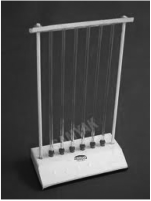
The Westergren pipette is a glass pipette 30 cm in length and 2.5 mm in diameter. The bore is uniform to within 5% throughout. A graduated scale in mm extends over the lower 20 cm.
Procedure
1) Thoroughly mix the blood sample and draw it into the Westergren pipette up to the 0 mm mark using a rubber teat.
2) Position the tube vertically in the rack, which contains a rubber cork at the base. Secure it with adjustable screws after taking out the teat.
3) Allow it to remain undisturbed for precisely 60 minutes, ensuring it is free from vibrations and not subjected to direct sunlight.
4) Measure the height of the clear plasma column above the sedimented red cells to the nearest millimeter.
Figure 1. Westergren pipette filled with blood and placed vertically on the rubber cork in the rack.Westergren pipette filled with blood and placed vertically on the rubber cork in the rack.
3. Results
3.1. Determination of Erythrocyte Sedimentation Rate
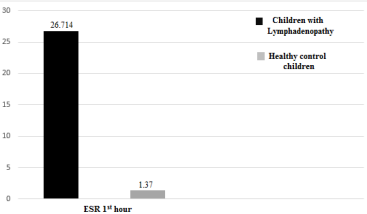
Blood samples were collectedfrom children with lymphadenopathy and healthy children to determine Erythrocyte sedimentation rate in children with lymphadenopathy. The results in Tables 1 and 2 and Figures 2 and 3 showed that, there was significant increase in Erythrocyte sedimentation rate in first and second hour in children with lymphadenopathy compared to healthy control children (P value = 0.001) (P value = 0.001) respectively.
Table 1. Comparison between 1st hour of ESR in children with lymphadenopathy and 1st hour of ESR in healthy control children.Comparison between 1st hour of ESR in children with lymphadenopathy and 1st hour of ESR in healthy control children.Comparison between 1st hour of ESR in children with lymphadenopathy and 1st hour of ESR in healthy control children.
Figure 2. Comparison between children with lymphadenopathy and healthy children as regards mean value of ESR in first hour.Comparison between children with lymphadenopathy and healthy children as regards mean value of ESR in first hour.
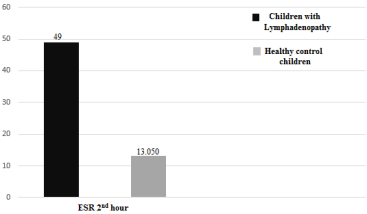
Table 2. Comparison between 2nd hour of ESR in children with lymphadenopathy and 1st hour of ESR in healthy control children.Comparison between 2nd hour of ESR in children with lymphadenopathy and 1st hour of ESR in healthy control children.Comparison between 2nd hour of ESR in children with lymphadenopathy and 1st hour of ESR in healthy control children.
Figure 3. Comparison between children with lymphadenopathy and healthy children as regards mean value of ESR in second hour.Comparison between children with lymphadenopathy and healthy children as regards mean value of ESR in second hour.
3.2. Determination of C-reactive Protein
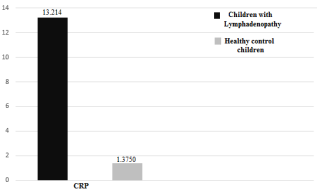
Serum samples were collectedfrom children with lymphadenopathy and healthy children to measure CRP. The results in Table 3 and Figure 4 showed that, there was significant increase in serum level of CRP in children with lymphadenopathy compared to healthy control children (P value = 0.007).
Table 3. Comparison between children with lymphadenopathy and healthy control children as regards CRP.Comparison between children with lymphadenopathy and healthy control children as regards CRP.Comparison between children with lymphadenopathy and healthy control children as regards CRP.
Figure 4. Comparison between children with lymphadenopathy and healthy children as regards mean value of serum CRP.Comparison between children with lymphadenopathy and healthy children as regards mean value of serum CRP.


4. Discussion
Lymphadenopathy refers to an abnormality in the size and texture of the lymph nodes, a condition that is relatively common during childhood. When the swelling of lymph nodes results from inflammatory and infectious processes, it is termed lymphadenitis
[9]
Pecora F, Abate L, Scavone S, Petrucci I, Costa F, Caminiti C, Argentiero A and Esposito S. (2021): Management of Infectious Lymphadenitis in Children. Children (Basel). 8(10): 860.
The present study revealed that; there was significant increase in ESR and serum level of CRP for children with lymphadenopathy compared to their levels in healthy control children. In the same way,
[10]
Six L, Polterauer S, Grimm C, Seebacher V, Tempfer C, Heinze G, Joura E, Reinthaller A and Hefler LA. (2007): C-reactive protein serum levels are closely associated with lymph node status, but not with prognosis in patients with vulvar cancer. Eur J Obstet Gynecol Reprod Biol. 137(2): 217-21.
who studied bacterial cervical lymphadenitis and this study were done on 38 children at the age between 2.5 months and 14 years. Leukocytosis and/or elevated concentrations of C-reactive protein occurred in the majority of patients. Also the results similar with,
[11]
Tishkowski K and Gupta V. (2022): Erythrocyte Sedimentation Rate. In: StatPearls [Internet]. Treasure Island (FL): StatPearls Publishing.
[11]
who reported that ESR is a widely used hematology test that can suggest and track heightened inflammatory activity in the body due to various conditions, including autoimmune diseases, infections, or tumors. Although the ESR is not specific to any particular disease, it is utilized alongside other tests to assess the presence of increased inflammatory activity. In the same context,
[8]
Mert A, Tabak F, Ozaras R, Tahan V, Oztürk R and Aktuğlu Y. (2002): Tuberculous lymphadenopathy in adults: a review of 35 cases. Acta Chir Belg. 102(2): 118-21.
who studied lymphadenopathy in adults on 35 patients, they reported that ESR was higher than 100 mm/hour in 25% and associated with systemic complaints. In same context,
[5]
Litao MK, Kamat D. Erythrocyte sedimentation rate and C-reactive protein (2014): how best to use them in clinical practice. Pediatr Ann. 43(10): 417-20.
reported that The ESR and CRP serve as indicators of inflammatory conditions and are widely utilized by healthcare professionals in both outpatient and inpatient environments. Understanding the physiological principles underlying these two tests is crucial for clinicians to apply them correctly. For instance, fibrinogen, which ESR indirectly measures, possesses a significantly longer half-life compared to CRP. This characteristic renders ESR particularly useful for tracking chronic inflammatory conditions, while CRP is more advantageous for diagnosis and monitoring therapeutic responses in acute inflammatory situations, such as acute infections. Numerous factors can lead to inaccurately elevated or reduced levels of ESR and CRP, making it essential to be aware of these influences. Consequently, when employed judiciously, ESR and CRP can effectively complement thorough history taking and physical examinations in the diagnosis and management of inflammatory conditions.
Abbreviations
ESR
Erythrocyte Sedimentation Rate
CRP
C- reactive Protein
mm
Millimeter
cm
Centimeter
nm
Nanometer
ml
Milliliter
Author Contributions
Ahmed Samy El-Shafey: Conceptualization, Data curation, Formal Analysis, Funding acquisition, Methodology, Writing– original draft, Writing – review & editing, Investigation
Chen L, Deng H, Cui H, Fang J, Zuo Z, Deng J, Li Y, Wang X, Zhao L.(2017): Inflammatory responses and inflammation-associated diseases in organs. Oncotarget. 2017 Dec 14; 9(6): 7204-7218.
Ferrero-Miliani L, Nielsen O, Andersen P, Girardin S. (2007): Chronic inflammation: importance of NOD2 and NALP3 in interleukin-1β generation. Clin Exp Immunol. 2007; 147: 227-235.
Falk N, Joseph R, (2025); Dieujuste M. Lymphadenopathy: Evaluation and Differential Diagnosis. Am Fam Physician. 2(3): 286-293.
[4]
Freeman AM, Matto P. (2023): Lymphadenopathy. In: StatPearls [Internet]. Treasure Island (FL): StatPearls Publishing; 2025 Jan.
[5]
Litao MK, Kamat D. Erythrocyte sedimentation rate and C-reactive protein (2014): how best to use them in clinical practice. Pediatr Ann. 43(10): 417-20.
Macy EM, Hayes TE and Tracy RP. (1997): Variability in the measurement of C-reactive protein in healthy subjects: implications for reference intervals and epidemiological applications. 43(1): 52-58.
[7]
Medzhitov R. Inflammation (2010): new adventures of an old flame. Cell. 2010; 140: 771-776.
Mert A, Tabak F, Ozaras R, Tahan V, Oztürk R and Aktuğlu Y. (2002): Tuberculous lymphadenopathy in adults: a review of 35 cases. Acta Chir Belg. 102(2): 118-21.
Pecora F, Abate L, Scavone S, Petrucci I, Costa F, Caminiti C, Argentiero A and Esposito S. (2021): Management of Infectious Lymphadenitis in Children. Children (Basel). 8(10): 860.
Six L, Polterauer S, Grimm C, Seebacher V, Tempfer C, Heinze G, Joura E, Reinthaller A and Hefler LA. (2007): C-reactive protein serum levels are closely associated with lymph node status, but not with prognosis in patients with vulvar cancer. Eur J Obstet Gynecol Reprod Biol. 137(2): 217-21.
Wahab MF, El-Gindy IM and Fathy GM. (1998): Screening tests for diagnosis of cervical lymphadenopathy presenting as prolonged fever. J Egypt Public Health Assoc. 73(5-6): 538-62.
[14]
Westergren A. (1957): Diagnostic tests: the erythrocyte sedimentation rate range and limitations of the technique". Triangle; the Sandoz Journal of Medical Science. 3(1): 20-5.
[15]
Zhou Y, Hong Y, Huang H. (2016): Triptolide Attenuates Inflammatory Response in Membranous Glomerulo-Nephritis Rat via Downregulation of NF-κB Signaling Pathway. Kidney and Blood Pressure Res. 2016; 41: 901-910.
El-Shafey, A. S., Amer, S. M., Alam, N. G. E., El-Shanshory, M. R., Ibrahim, F. A. H. (2026). Assessment of Inflammatory Markers in Children with Lymphadenopathy. International Journal of Immunology, 14(1), 26-30. https://doi.org/10.11648/j.iji.20261401.14
El-Shafey, A. S.; Amer, S. M.; Alam, N. G. E.; El-Shanshory, M. R.; Ibrahim, F. A. H. Assessment of Inflammatory Markers in Children with Lymphadenopathy. Int. J. Immunol.2026, 14(1), 26-30. doi: 10.11648/j.iji.20261401.14
El-Shafey AS, Amer SM, Alam NGE, El-Shanshory MR, Ibrahim FAH. Assessment of Inflammatory Markers in Children with Lymphadenopathy. Int J Immunol. 2026;14(1):26-30. doi: 10.11648/j.iji.20261401.14
@article{10.11648/j.iji.20261401.14,
author = {Ahmed Samy El-Shafey and Saida Mohamed Amer and Nanis Gamal El-Din Alam and Mohamed Ramadan El-Shanshory and Fatma Abdel Hamid Ibrahim},
title = {Assessment of Inflammatory Markers in Children with Lymphadenopathy},
journal = {International Journal of Immunology},
volume = {14},
number = {1},
pages = {26-30},
doi = {10.11648/j.iji.20261401.14},
url = {https://doi.org/10.11648/j.iji.20261401.14},
eprint = {https://article.sciencepublishinggroup.com/pdf/10.11648.j.iji.20261401.14},
abstract = {Lymphadenopathy is palpable enlargement of lymph nodes. Inflammation is a normal part of your body's response to injuries and invaders. It promotes healing and helps you feel better.Inflammation is a vital biological mechanism that acts as the body's primary defense against harmful agents, such as pathogens, damaged cells, and irritants. Although acute inflammation is important for healing and recovery, chronic inflammation may result in various diseases, including cancer, cardiovascular issues, and autoimmune disorders. Inflammation can arise from numerous causes of lymphadenopathy, including microbial infections, autoimmune diseases, cancers, and other factors that contribute to elevated inflammatory markers in the bloodstream. Inflammatory markers as Erythrocyte sedimentation rate (ESR) and C Reactive Protein (CRP) were measured in serum of children with lymphadenopathy to help for monitoring the inflammation state. The erythrocyte sedimentation rate and C-reactive protein are among the oldest laboratory tests still in use. The results Showed that, there was significant increase in Erythrocyte sedimentation rate in first and second hour in children with lymphadenopathy compared to healthy control children (P value = 0.001) (P value = 0.001) respectively. There was also significant increase in serum level of C Reactive Protein in children with lymphadenopathy compared to healthy control children (P value = 0.007).},
year = {2026}
}
TY - JOUR
T1 - Assessment of Inflammatory Markers in Children with Lymphadenopathy
AU - Ahmed Samy El-Shafey
AU - Saida Mohamed Amer
AU - Nanis Gamal El-Din Alam
AU - Mohamed Ramadan El-Shanshory
AU - Fatma Abdel Hamid Ibrahim
Y1 - 2026/03/14
PY - 2026
N1 - https://doi.org/10.11648/j.iji.20261401.14
DO - 10.11648/j.iji.20261401.14
T2 - International Journal of Immunology
JF - International Journal of Immunology
JO - International Journal of Immunology
SP - 26
EP - 30
PB - Science Publishing Group
SN - 2329-1753
UR - https://doi.org/10.11648/j.iji.20261401.14
AB - Lymphadenopathy is palpable enlargement of lymph nodes. Inflammation is a normal part of your body's response to injuries and invaders. It promotes healing and helps you feel better.Inflammation is a vital biological mechanism that acts as the body's primary defense against harmful agents, such as pathogens, damaged cells, and irritants. Although acute inflammation is important for healing and recovery, chronic inflammation may result in various diseases, including cancer, cardiovascular issues, and autoimmune disorders. Inflammation can arise from numerous causes of lymphadenopathy, including microbial infections, autoimmune diseases, cancers, and other factors that contribute to elevated inflammatory markers in the bloodstream. Inflammatory markers as Erythrocyte sedimentation rate (ESR) and C Reactive Protein (CRP) were measured in serum of children with lymphadenopathy to help for monitoring the inflammation state. The erythrocyte sedimentation rate and C-reactive protein are among the oldest laboratory tests still in use. The results Showed that, there was significant increase in Erythrocyte sedimentation rate in first and second hour in children with lymphadenopathy compared to healthy control children (P value = 0.001) (P value = 0.001) respectively. There was also significant increase in serum level of C Reactive Protein in children with lymphadenopathy compared to healthy control children (P value = 0.007).
VL - 14
IS - 1
ER -
El-Shafey, A. S., Amer, S. M., Alam, N. G. E., El-Shanshory, M. R., Ibrahim, F. A. H. (2026). Assessment of Inflammatory Markers in Children with Lymphadenopathy. International Journal of Immunology, 14(1), 26-30. https://doi.org/10.11648/j.iji.20261401.14
El-Shafey, A. S.; Amer, S. M.; Alam, N. G. E.; El-Shanshory, M. R.; Ibrahim, F. A. H. Assessment of Inflammatory Markers in Children with Lymphadenopathy. Int. J. Immunol.2026, 14(1), 26-30. doi: 10.11648/j.iji.20261401.14
El-Shafey AS, Amer SM, Alam NGE, El-Shanshory MR, Ibrahim FAH. Assessment of Inflammatory Markers in Children with Lymphadenopathy. Int J Immunol. 2026;14(1):26-30. doi: 10.11648/j.iji.20261401.14
@article{10.11648/j.iji.20261401.14,
author = {Ahmed Samy El-Shafey and Saida Mohamed Amer and Nanis Gamal El-Din Alam and Mohamed Ramadan El-Shanshory and Fatma Abdel Hamid Ibrahim},
title = {Assessment of Inflammatory Markers in Children with Lymphadenopathy},
journal = {International Journal of Immunology},
volume = {14},
number = {1},
pages = {26-30},
doi = {10.11648/j.iji.20261401.14},
url = {https://doi.org/10.11648/j.iji.20261401.14},
eprint = {https://article.sciencepublishinggroup.com/pdf/10.11648.j.iji.20261401.14},
abstract = {Lymphadenopathy is palpable enlargement of lymph nodes. Inflammation is a normal part of your body's response to injuries and invaders. It promotes healing and helps you feel better.Inflammation is a vital biological mechanism that acts as the body's primary defense against harmful agents, such as pathogens, damaged cells, and irritants. Although acute inflammation is important for healing and recovery, chronic inflammation may result in various diseases, including cancer, cardiovascular issues, and autoimmune disorders. Inflammation can arise from numerous causes of lymphadenopathy, including microbial infections, autoimmune diseases, cancers, and other factors that contribute to elevated inflammatory markers in the bloodstream. Inflammatory markers as Erythrocyte sedimentation rate (ESR) and C Reactive Protein (CRP) were measured in serum of children with lymphadenopathy to help for monitoring the inflammation state. The erythrocyte sedimentation rate and C-reactive protein are among the oldest laboratory tests still in use. The results Showed that, there was significant increase in Erythrocyte sedimentation rate in first and second hour in children with lymphadenopathy compared to healthy control children (P value = 0.001) (P value = 0.001) respectively. There was also significant increase in serum level of C Reactive Protein in children with lymphadenopathy compared to healthy control children (P value = 0.007).},
year = {2026}
}
TY - JOUR
T1 - Assessment of Inflammatory Markers in Children with Lymphadenopathy
AU - Ahmed Samy El-Shafey
AU - Saida Mohamed Amer
AU - Nanis Gamal El-Din Alam
AU - Mohamed Ramadan El-Shanshory
AU - Fatma Abdel Hamid Ibrahim
Y1 - 2026/03/14
PY - 2026
N1 - https://doi.org/10.11648/j.iji.20261401.14
DO - 10.11648/j.iji.20261401.14
T2 - International Journal of Immunology
JF - International Journal of Immunology
JO - International Journal of Immunology
SP - 26
EP - 30
PB - Science Publishing Group
SN - 2329-1753
UR - https://doi.org/10.11648/j.iji.20261401.14
AB - Lymphadenopathy is palpable enlargement of lymph nodes. Inflammation is a normal part of your body's response to injuries and invaders. It promotes healing and helps you feel better.Inflammation is a vital biological mechanism that acts as the body's primary defense against harmful agents, such as pathogens, damaged cells, and irritants. Although acute inflammation is important for healing and recovery, chronic inflammation may result in various diseases, including cancer, cardiovascular issues, and autoimmune disorders. Inflammation can arise from numerous causes of lymphadenopathy, including microbial infections, autoimmune diseases, cancers, and other factors that contribute to elevated inflammatory markers in the bloodstream. Inflammatory markers as Erythrocyte sedimentation rate (ESR) and C Reactive Protein (CRP) were measured in serum of children with lymphadenopathy to help for monitoring the inflammation state. The erythrocyte sedimentation rate and C-reactive protein are among the oldest laboratory tests still in use. The results Showed that, there was significant increase in Erythrocyte sedimentation rate in first and second hour in children with lymphadenopathy compared to healthy control children (P value = 0.001) (P value = 0.001) respectively. There was also significant increase in serum level of C Reactive Protein in children with lymphadenopathy compared to healthy control children (P value = 0.007).
VL - 14
IS - 1
ER -